
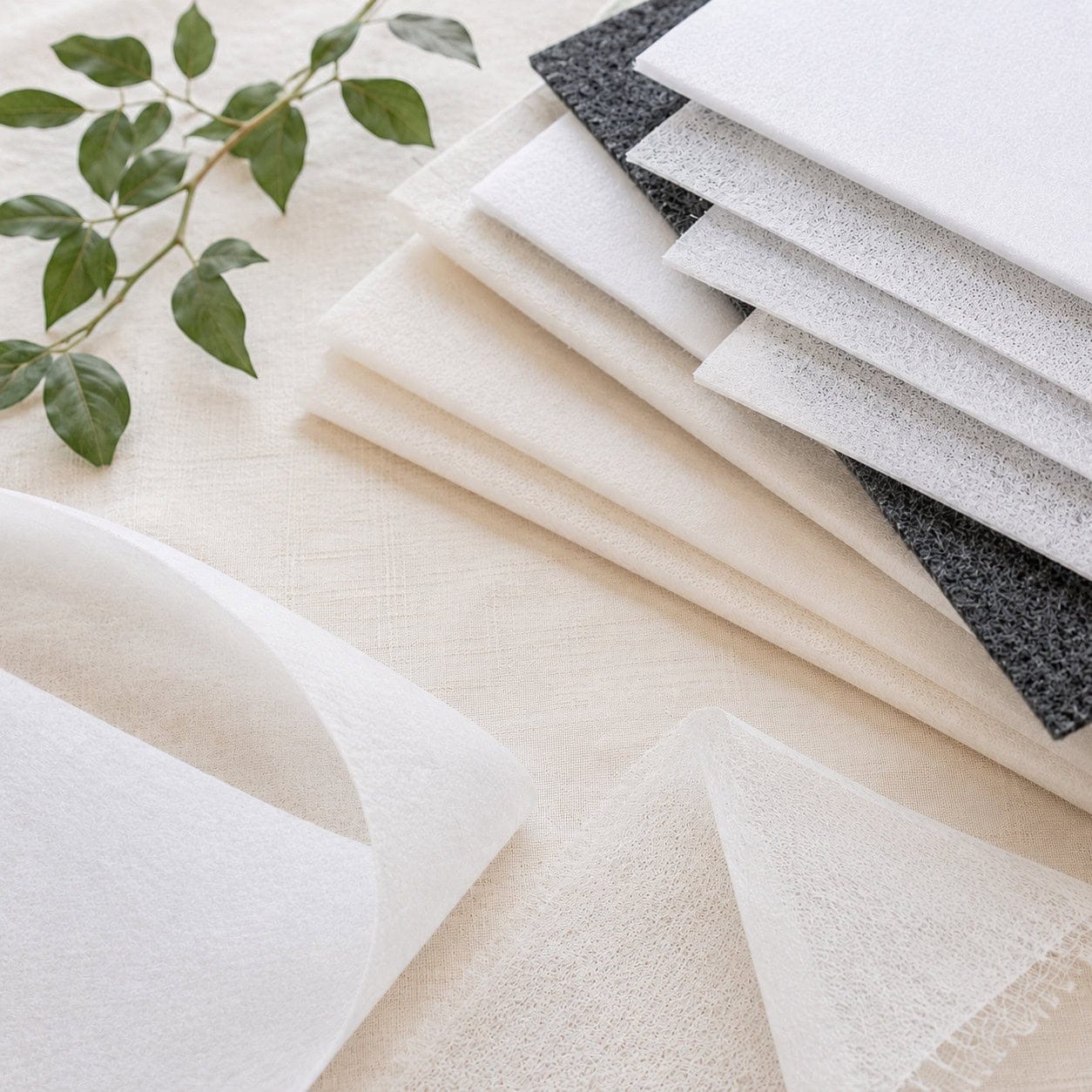
If you’ve ever stood in the fabric store staring at a wall of interfacing and wondering which one to buy, you’re not alone.
Interfacing can be one of the most confusing supplies for beginner and experienced sewists alike. With fusible, sew-in, woven, non-woven, lightweight, heavyweight, and everything in between, it’s easy to feel overwhelmed.
The good news? Choosing the right interfacing doesn’t have to be complicated.
In this guide, I’ll break down the different types of interfacing, when to use them, and how to choose the best option for your sewing projects.
What Is Interfacing?
Interfacing is a material added to fabric to provide structure, support, stability, or shape.
You’ll often find interfacing used in:
- Bags and purses
- Clutches
- Collars and cuffs
- Waistbands
- Button plackets
- Zipper areas
- Home décor projects
Without interfacing, many projects can feel floppy, lose their shape, or wear out more quickly.
The Two Main Types of Interfacing
Fusible Interfacing
Fusible interfacing has an adhesive on one side that bonds to your fabric when heat is applied with an iron.
Pros:
- Quick and easy to apply
- Great for most sewing projects
- Available in many weights
Cons:
- Can bubble if applied incorrectly
- Some fabrics don’t tolerate high heat well
I use fusible interfacing for the majority of my bag, pouch, and clutch patterns because it’s fast and provides reliable structure.
Sew-In Interfacing
Sew-in interfacing is stitched into the project rather than fused.
Pros:
- No adhesive required
- Works well with delicate fabrics
- Won’t bubble over time
Cons:
- Requires extra sewing steps
- Can shift during construction
Sew-in interfacing is a great option when working with fabrics that don’t respond well to heat.
Woven vs. Non-Woven Interfacing
Woven Interfacing
Woven interfacing behaves similarly to fabric and has a grainline.
Best for:
- Garments
- Lightweight projects
- Projects where drape matters
Non-Woven Interfacing
Non-woven interfacing is made from bonded fibers rather than woven threads.
Best for:
- Bags
- Pouches
- Clutches
- Structured accessories
Most of the projects I design use non-woven interfacing because it provides excellent stability without adding unnecessary complexity.
How to Choose the Right Weight
Lightweight
Use for:
- Quilting cotton
- Blouses
- Lightweight garments
Provides subtle support without making the fabric stiff.
Medium Weight
Use for:
- Tote bags
- Pouches
- Wallets
- Everyday accessories
This is often the most versatile choice for sewing projects.
Heavyweight
Use for:
- Structured bags
- Clutches
- Projects that need to hold their shape
Heavyweight interfacing adds firmness and professional-looking structure.
My Rule of Thumb
When choosing interfacing, match the weight of your interfacing to the weight and purpose of your fabric.
For example:
- Lightweight cotton → Lightweight interfacing
- Medium canvas → Medium-weight interfacing
- Structured clutch → Heavyweight interfacing
If you’re unsure, it’s usually better to start lighter. You can always add more structure, but removing stiffness is much harder.
Always Test First
Before applying interfacing to your entire project, fuse a small scrap piece.
This allows you to check:
- How the fabric feels
- Whether the adhesive bonds properly
- How much structure is added
- Whether the fabric still drapes the way you want
A five-minute test can save an entire project.
Interfacing Recommendations for Common Projects
| Project | Recommended Interfacing |
|---|---|
| Zipper Pouch | Medium-weight fusible |
| Tote Bag | Medium to heavy-weight fusible |
| Wallet | Medium-weight fusible |
| Clutch | Heavyweight fusible |
| Collar | Lightweight woven |
| Waistband | Medium-weight woven |
Final Thoughts
Interfacing may not be the most exciting sewing supply, but it can make a huge difference in the finished look and durability of your project.
The right interfacing helps your projects look more professional, hold their shape, and last longer.
If you’re ever unsure which interfacing to use, start with the fabric you’re using and think about how much structure you want your finished project to have. With a little testing and practice, choosing interfacing will become second nature.